The New Nigerian Newspaper commences publication (January 1)
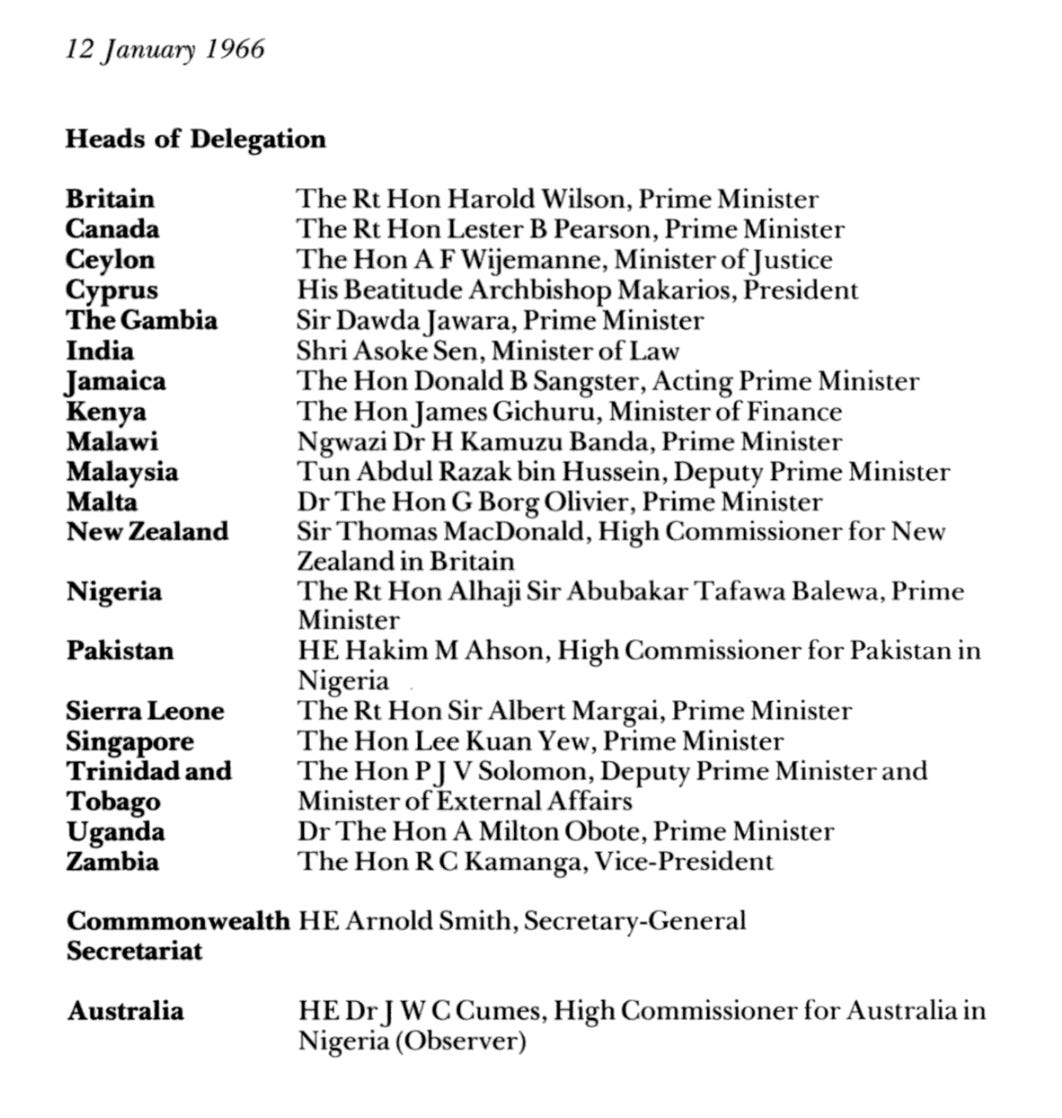
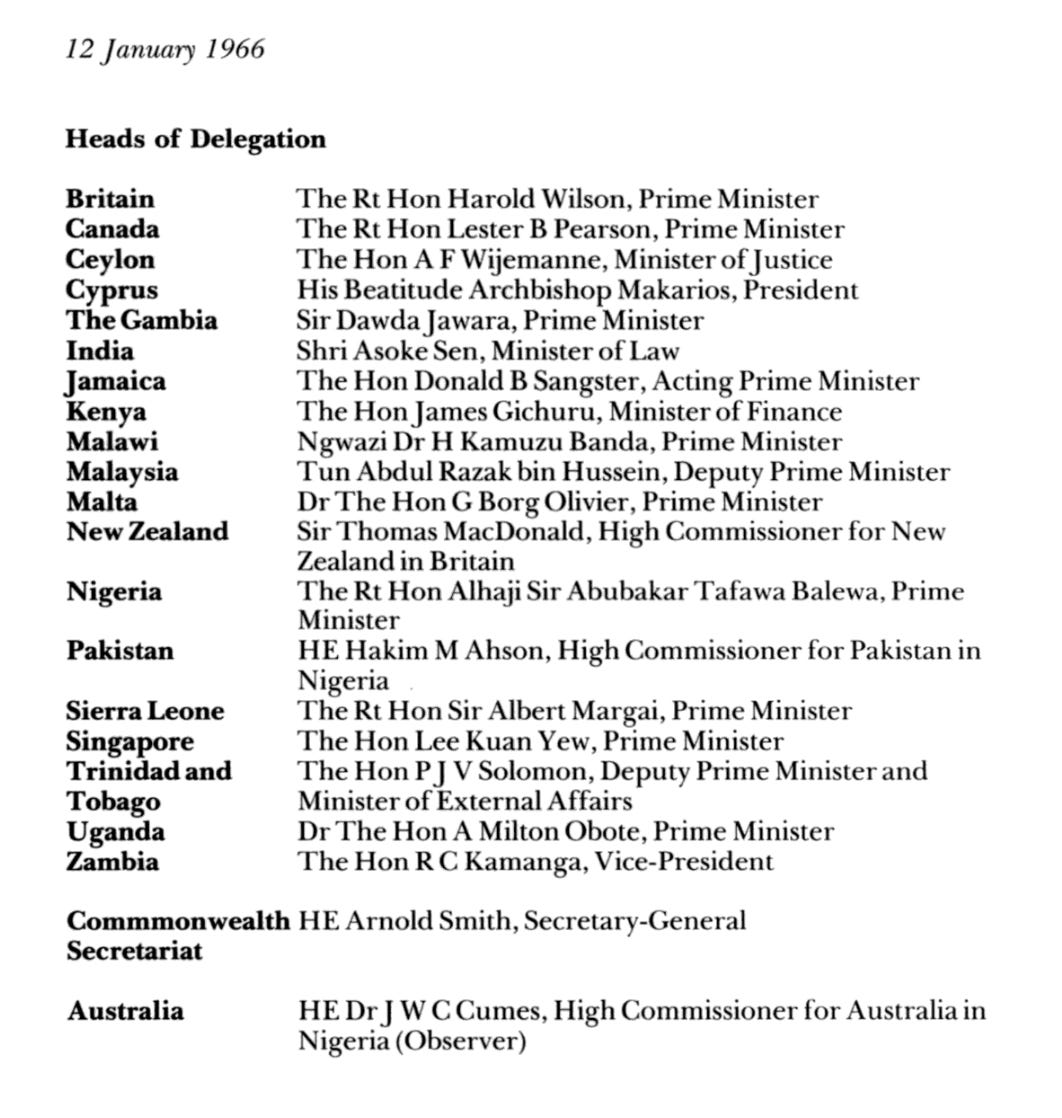
Commonwealth Heads of Government Meeting, hosted by Nigeria under the Chairmanship of Prime Minister Tafawa Balewa. The first to be hosted in Africa, and the first since the establishment of the Commonwealth Secretariat on 25 June 1965. (January 10-12)
Indira Gandhi is sworn in on January 24 as India’s fourth - and first female - Prime Minister, replacing Lal Bahadur Shastri, who died in India on January 11, while the Commonwealth Heads of Government Meeting was going on in Lagos.
Nigeria’s first and second military coups take place (January 15 and July 29); each one very bloody.
After the July 29 coup, Nigeria is without a Head of State on July 30 and 31, until Yakubu Gowon takes over on August 1.
John Major arrives and begins working at Standard Bank, Jos.
Abdulsalami Abubakar (Nigeria’s Head of State 1998-99), who started out in the Nigerian Air Force (1963), switches commission to the Nigerian Army.
Newton Jibunoh departs London on December 27, driving a Volkswagen Beetle, headed for Lagos, across Europe and the Sahara desert. The journey takes him two months.
Nigeria runs without Federal Ministers, from the January 15 coup, until April 1967. Permanent Secretaries run the show.
Isaac Adaka Boro leads a (failed) Niger Delta secession bid. Boro founded the Niger Delta Volunteer Force, and declared an independent Republic on February 23, kickstarting a rebellion that was crushed by the military government after 12 days.
The Olowo of Owo, Oba (Sir) Olateru Olagbegi II, is deposed (June)
Nnamdi Azikiwe writes a lengthy letter, dated April 27, to Head of State, Gen. Ironsi, bitterly lamenting harassment at the hands of Emeka Ojukwu, Military Governor of the Eastern Region.
TIME magazine publishes a story titled, “Nigeria: The Men of Sandhurst.” (January 28 edition)
Dutchman Joop Berkhout arrives in Nigeria in 1966, as the founding head of Evans Brothers Publishers.
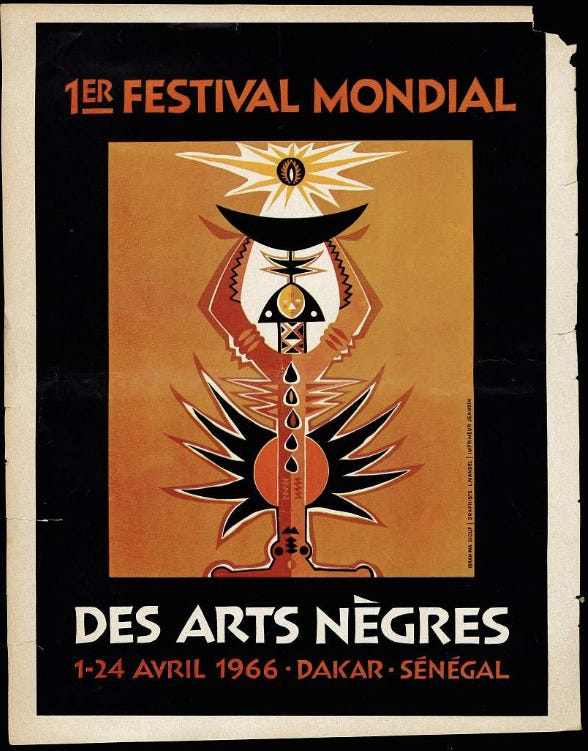
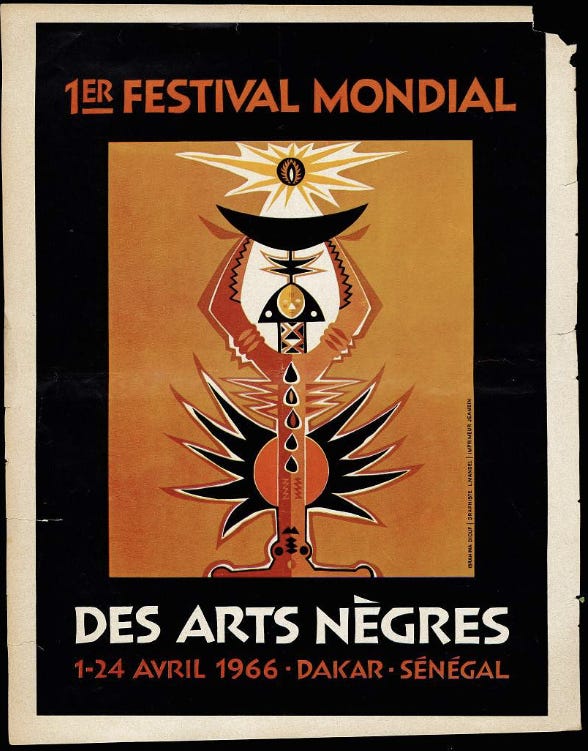
The First World Festival of Negro Arts, a precursor to FESTAC ‘77, takes place in Dakar, Senegal. James Ngugi (later to be known as Ngũgĩ wa Thiong’o) wins the Novel prize; Wole Soyinka wins the Drama Prize; Derek Walcott & Christopher Okigbo are runners-up for the Poetry Prize; and Nelson Mandela wins the Reportage Prize. (Okigbo reportedly declined his prize).
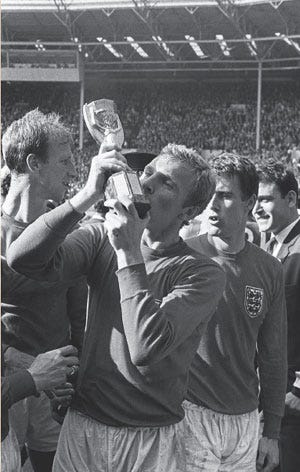
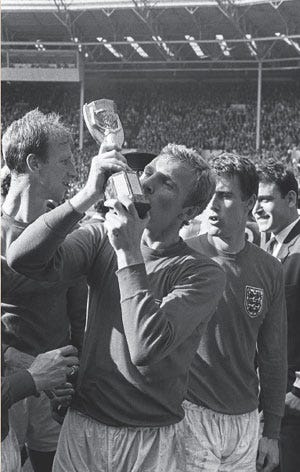
On 30 July, the day after Nigeria’s second coup, England defeats West Germany at Wembley Stadium to win the World Cup.
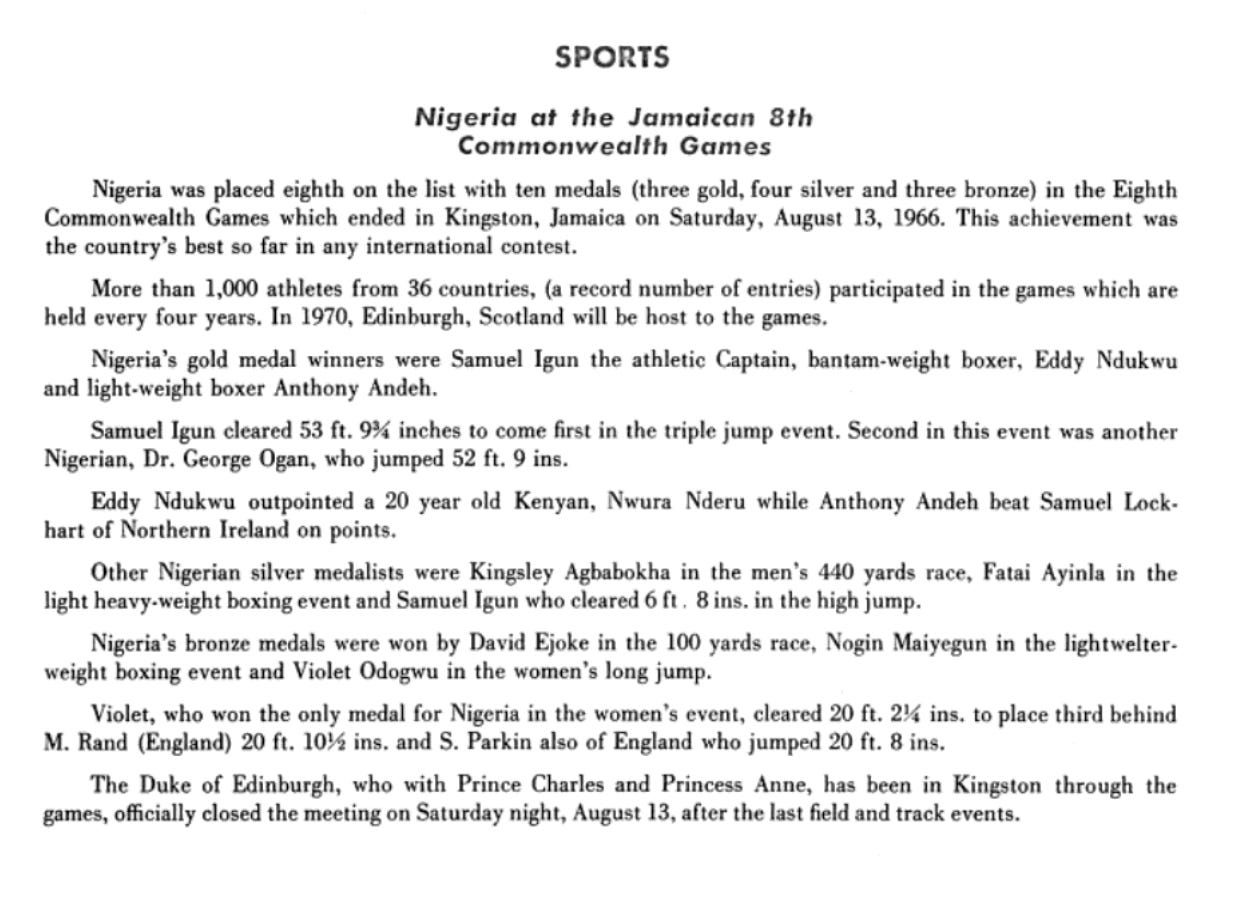
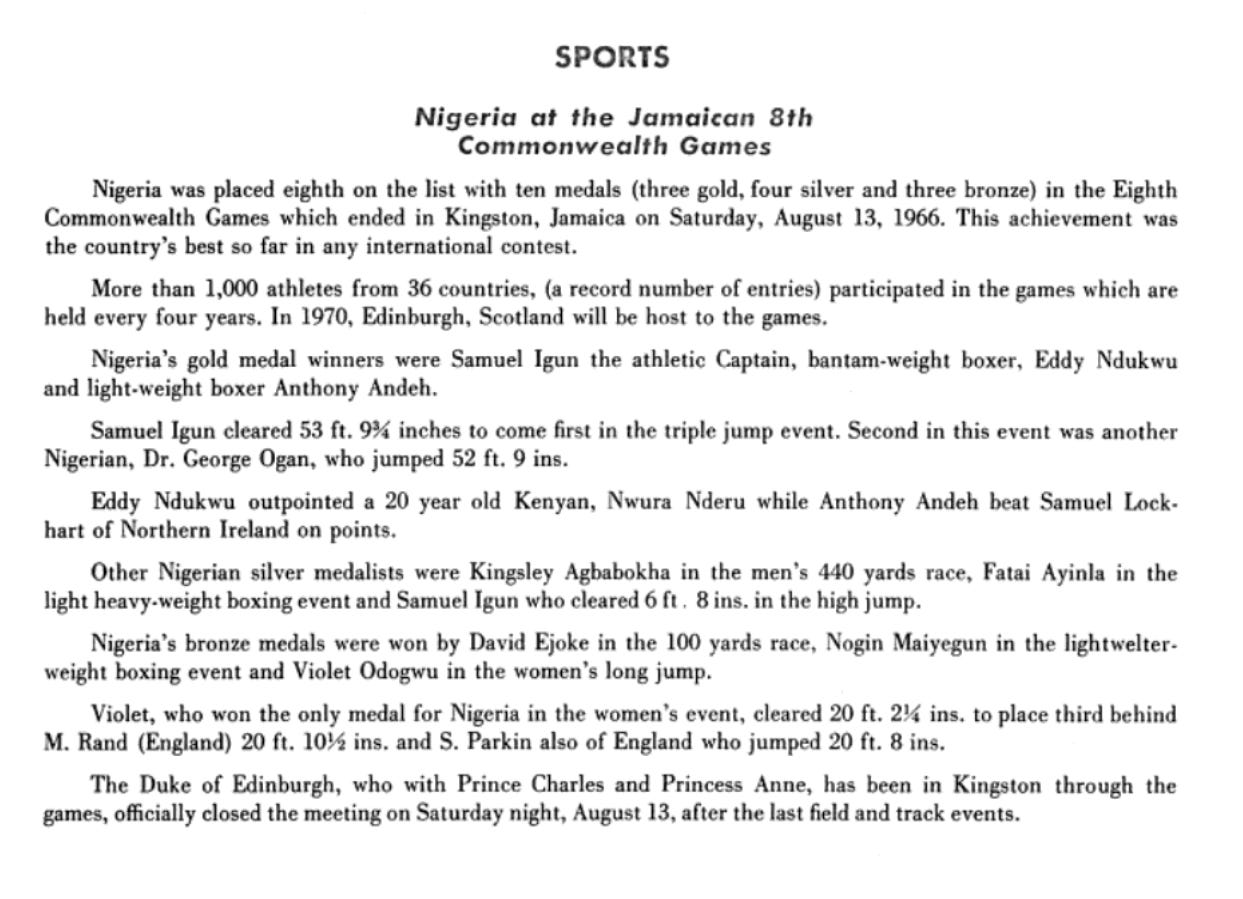
Just days after the second coup, Nigeria participated in the 1966 British Empire and Commonwealth Games, held 4-13 August, in Kingston, Jamaica; opened by HRH Prince Philip, the Duke of Edinburgh (his first time opening a Commonwealth Games). Nigeria finished joint 9th with India on the medals table, with 3 gold, 4 silver, and 3 bronze medals.
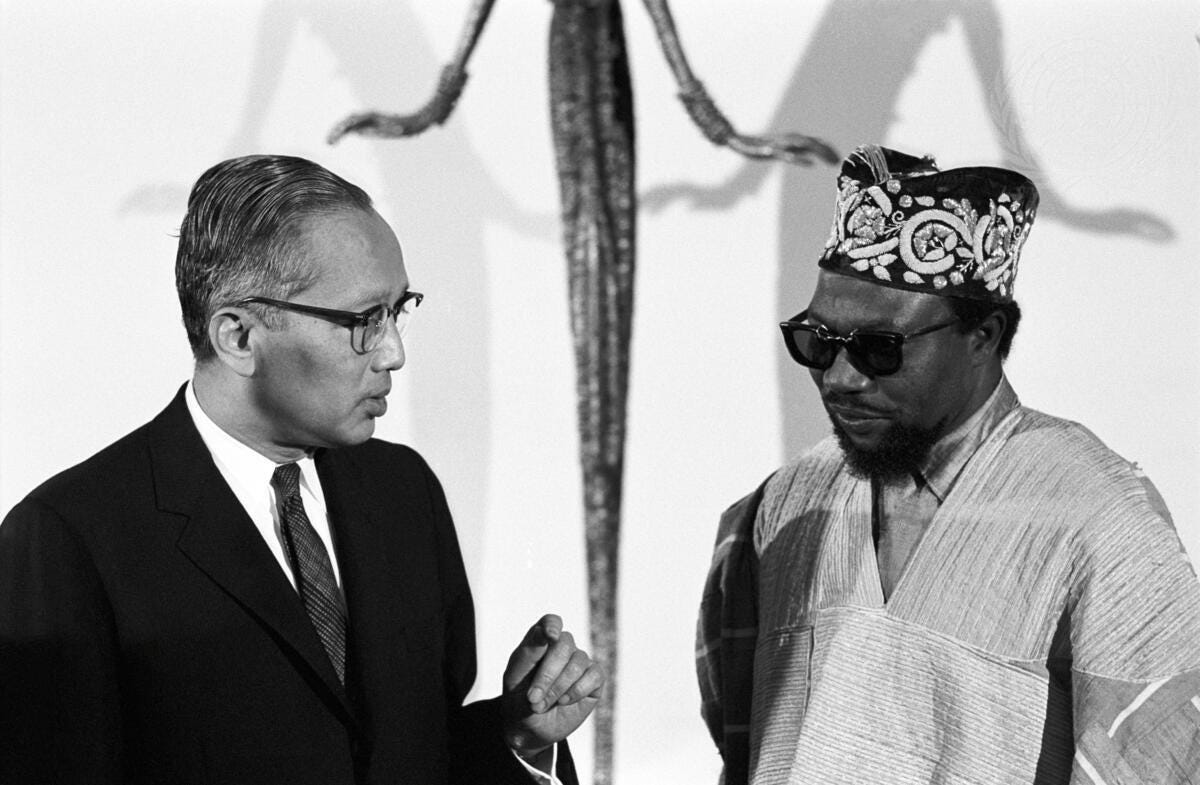
The Government of Nigeria gifts a 6-feet-10 inches tall bronze sculpture titled “Anyanwu” (”Sun”), by sculptor, Ben Enwonwu, to the United Nations, on October 5. The work can still be seen at the United Nations Headquarters in New York, on the second floor corridor of the Conference Building, between the Security Council and Trusteeship Council.

Edson Arantes do Nascimento, aka Pelé, scored his 1,000th goal, at the Maracanã Stadium in Rio de Janeiro, Brazil (November 19)